Nondestructive Testing (NDT)
Magnetic Particle Testing (MT)
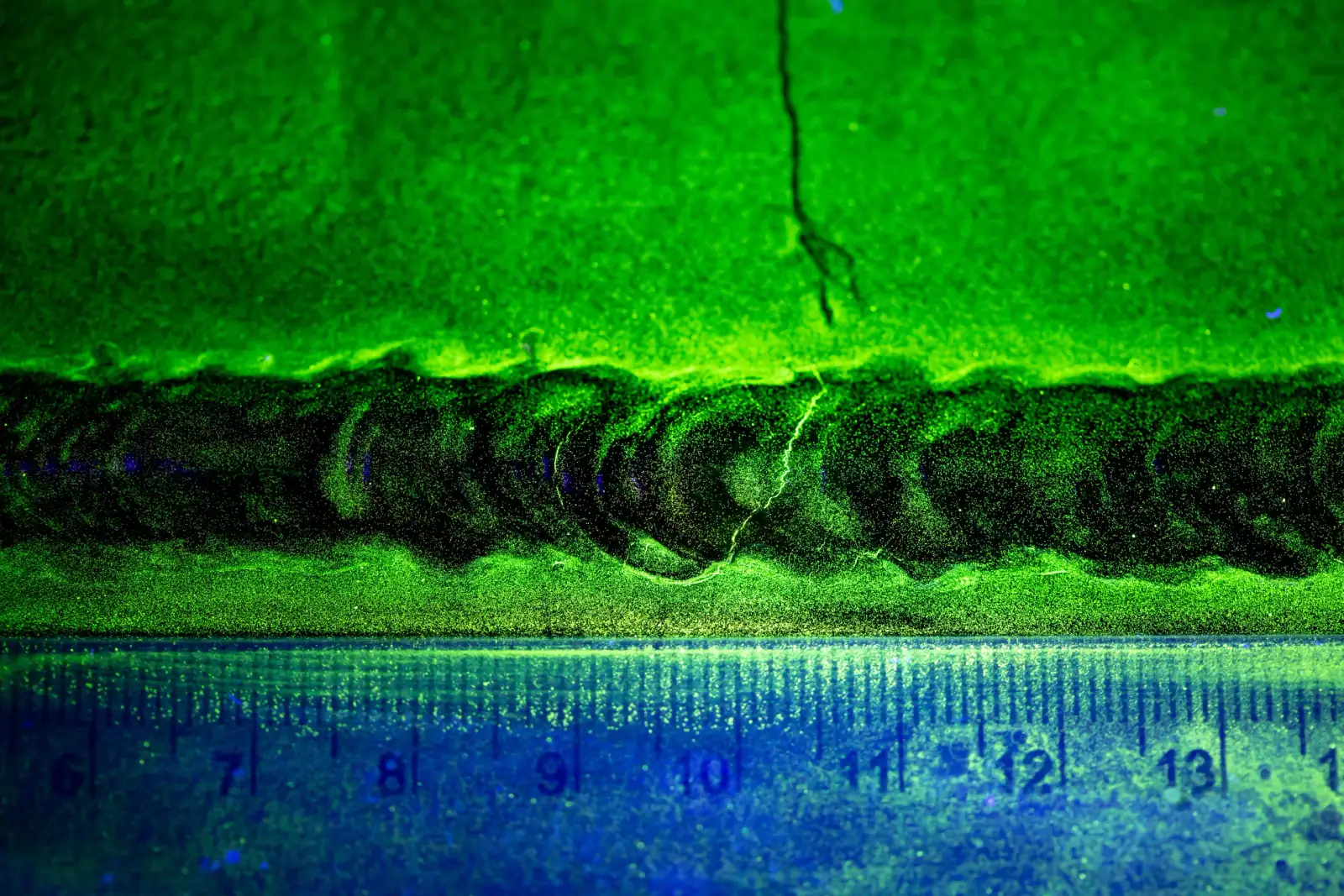
Magnetic Particle Testing (MT) induces a magnetic field into a ferromagnetic component, then applies iron particles that gather at surface and slightly subsurface discontinuities — instantly revealing fatigue cracks or manufacturing flaws.
MT is a fast, cost-effective method commonly used on landing gear, engine mounts, and structural steel parts where fatigue cracking is a known failure mode.
Because the indication appears directly on the part surface, MT gives immediate, highly visual results — useful for both in-process quality checks and in-service inspection.
What's Included
- Crack and seam detection on steel and other ferromagnetic alloys
- Wet fluorescent and dry visible particle methods
- Weld inspection on structural and pressure-boundary components
- In-service and receiving inspection support
Who It's For
Repair stations and manufacturers working with ferromagnetic components — landing gear, engine mounts, structural steel, and forgings.
What MT Finds — and Its Limits
MT finds cracks, laps, seams, and inclusions that are open to the surface or just below it, in ferromagnetic materials such as carbon and low-alloy steels. Indications form directly on the part, so results are immediate.
It doesn't work on non-ferromagnetic metals such as aluminum, titanium, or austenitic stainless steel — PT or ET covers those.
Procedures and Standards
Every inspection follows a written procedure and the acceptance criteria in your governing document. That may be AWS D1.1 for welds, an ASTM standard, or your customer's own specification.
Tell us which specification governs your part, and we'll confirm the technique and acceptance criteria before work starts.
What You Receive
A written report listing the procedure, technique, and acceptance criteria used, the areas inspected, and each relevant indication with its disposition.
Related Reading
Magnetic Particle Testing FAQ
What materials can magnetic particle testing inspect?
Only ferromagnetic materials, such as carbon and low-alloy steels and some other iron-based alloys. Aluminum, titanium, copper alloys, and austenitic stainless steel need a different method, such as PT or ET.
Can MT find flaws below the surface?
Only slightly below it. MT is a surface and near-surface method; for deeper internal flaws, ultrasonic testing is the usual choice.
Do you perform magnetic particle inspection on-site?
Yes. We inspect at your facility or job site — in Miami, across South Florida, and anywhere else by request.
Ready to talk about your project?
Call (657) 430-4666, email info@lionndt.com, or send a message and we'll follow up promptly.
Related Services
Ultrasonic Testing (UT)
Volumetric inspection for internal flaws and precise thickness measurement.
Liquid Penetrant Testing (PT)
High-sensitivity detection of surface-breaking defects on non-porous materials.
Visual Testing (VT)
The foundation of NDT — direct and remote-visual inspection for damage and corrosion.
Eddy Current Testing (ET)
Fast, portable electromagnetic inspection for cracks and corrosion in conductive materials.